Brochure vs Flyer Printing: Choosing the Right Marketing Print in Dubai
Choosing the Right Print Format for Your Marketing Message
Introduction
Marketing teams in Dubai often default to whichever print format they used last time, without stopping to ask whether it actually fits the current campaign. A property launch, a restaurant menu, and a one-day retail promotion all need very different printed materials, yet the two most common options — a brochure and a flyer — are frequently used interchangeably, which wastes both budget and impact.
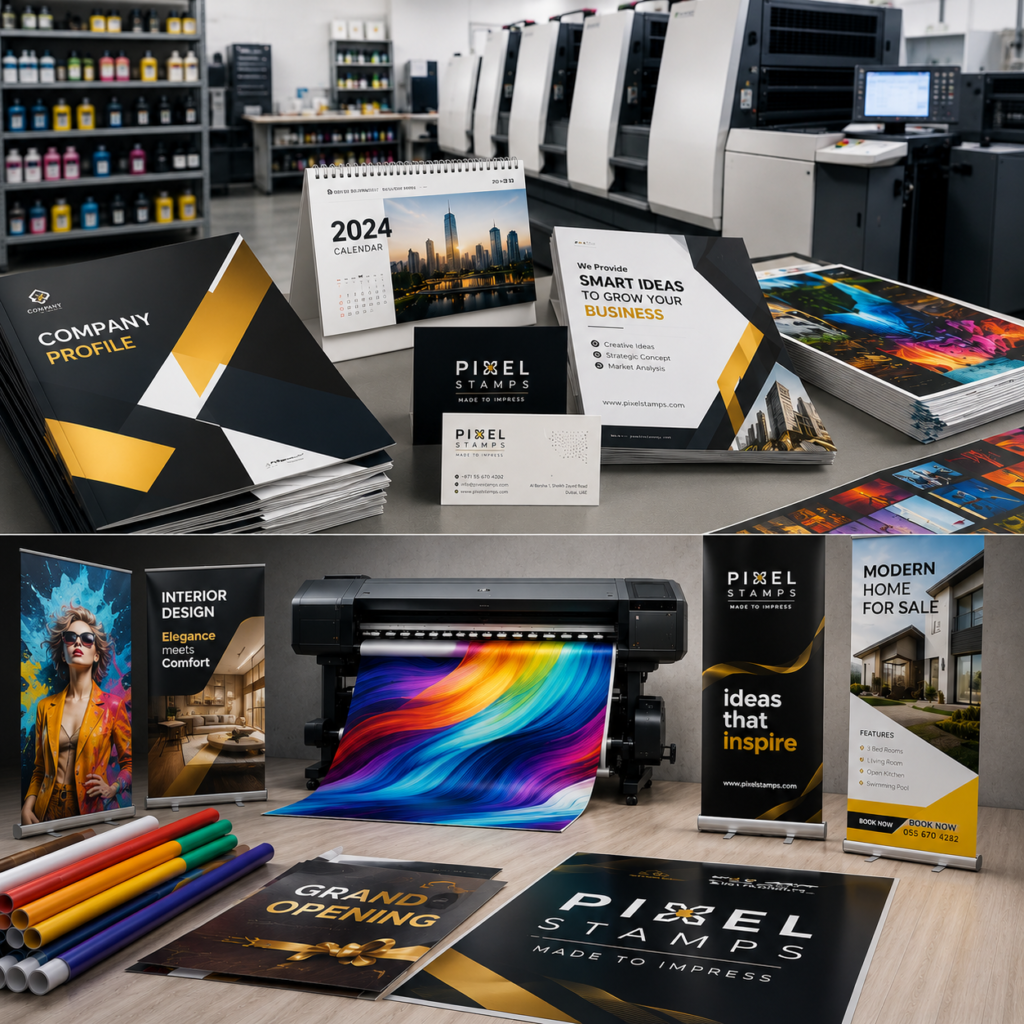
At Pixel Stamps, we produce brochures, flyers, and a full range of marketing print from our Al Barsha workshop for businesses across Dubai. This guide breaks down when to use each format, how to choose paper and finishing, and the mistakes that most often lead to reprints.
Why the Format Choice Affects Your Message
A flyer is built for a single, immediate message — an offer, an event, a promotion — read in a few seconds and often discarded or acted on quickly. A brochure is built to carry more information over multiple pages or panels, giving a reader time to explore your services, pricing, or portfolio in more depth. Using a flyer where a brochure is needed leaves the reader without enough information; using a brochure for a simple one-day promotion is a waste of print budget.
1. When to Use a Flyer
Flyers are single-sheet, single or double-sided prints, usually A5 or A4 in size, and are the fastest, most affordable way to get a simple message into someone’s hands. They work best for:
- Limited-time promotions and discounts
- Event announcements and invitations to a specific date
- Restaurant or retail handouts distributed in-store or on the street
- Bulk distribution where cost per unit needs to stay low
2. When to Use a Brochure
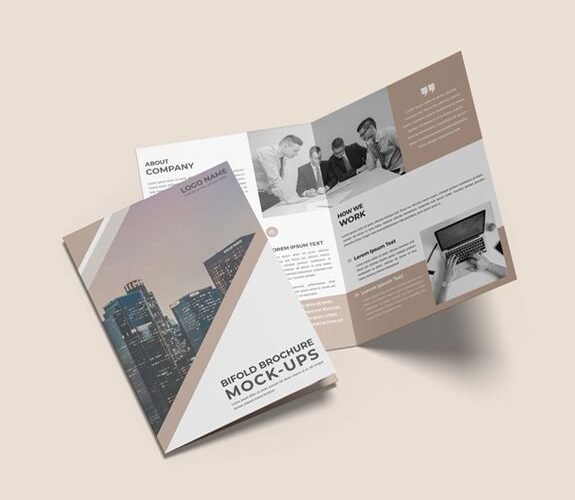
Brochures — typically produced as bi-fold or tri-fold sheets, or as multi-page booklets — are designed to hold more information and to be kept rather than discarded immediately. They work best for:
- Company profiles and service overviews handed to prospective clients
- Real estate project brochures with floor plans and specifications
- Product catalogues with multiple items or variants
- Exhibition handouts meant to be taken home and reviewed later
3. Comparing Brochures and Flyers
| Factor | Flyer | Brochure |
| Best For | Single, urgent message | Detailed information, multiple points |
| Typical Format | Single sheet, A5/A4 | Bi-fold, tri-fold, or multi-page booklet |
| Reader Engagement Time | A few seconds | A few minutes |
| Cost Per Unit (Bulk) | Low | Moderate to higher |
| Typical Use Case | Promotions, events, street handouts | Company profiles, catalogues, real estate |
4. Paper Weight and Finish Matter More Than Most Businesses Realize
Paper stock affects how premium a printed piece feels in someone’s hand. Lighter paper (around 130–170gsm) is common and cost-effective for high-volume flyers, while brochures — especially those meant to represent a brand’s image, such as real estate or corporate profiles — benefit from heavier stock (200gsm and above) and a matte or gloss lamination finish, which also protects the print from handling wear.
5. Matching Format to Distribution Method
How the piece will actually be distributed should shape the format decision. A flyer designed for street handouts needs to survive being folded into a pocket, while a brochure meant to be mailed or displayed in a stand needs a finish that looks good sitting on a shelf. Digital sharing also matters — many clients now request a PDF version of their brochure for email alongside the printed copies, which is worth planning for at the design stage.
6. Design Considerations for Print vs Digital
A design built for a screen does not always translate well to paper. Colours can shift slightly between digital (RGB) and print (CMYK) colour modes, and elements that look fine on a bright screen can appear duller in print if the file was not converted correctly before production. We always recommend reviewing a printed proof rather than approving artwork purely from an on-screen preview, particularly for brochures where colour consistency across pages matters for a professional look.
7. Quantity and Reprint Planning
Ordering print in the right quantity avoids two common problems: running out mid-campaign, or ending up with boxes of outdated flyers after a promotion ends. For recurring campaigns, it is often more economical to order a moderate batch and reprint as needed rather than printing a very large one-time run of material that may need updating before it is used up, especially for flyers tied to time-limited offers.
Common Mistakes to Avoid
- Cramming too much information onto a single flyer instead of upgrading to a brochure
- Ordering a brochure for a one-day promotion that only needed a flyer
- Choosing paper stock too thin for a brochure meant to represent a premium brand
- Skipping a print proof before a large run, resulting in colour mismatches
- Not planning fold lines correctly, causing text or images to be cut awkwardly at the crease
8. Combining Formats for a Full Campaign
Many of our clients do not choose between a brochure and a flyer — they use both, at different stages of the same campaign. A flyer might announce a property launch event, while a brochure handed out at that same event carries the full project details, floor plans, and pricing. Planning both pieces together, with consistent branding and messaging, gives a more cohesive campaign than treating them as separate, unrelated print jobs.
Who Orders Brochures and Flyers in Dubai?
Real estate agencies, retail brands, restaurants, clinics, schools, and event organizers make up the bulk of our brochure and flyer clients. Real estate in particular relies heavily on well-finished brochures for project launches, while retail and hospitality lean more toward flyers for time-sensitive promotions.
Frequently Asked Questions About Brochure and Flyer Printing
What size is best for a flyer?
A5 and A4 are the most common flyer sizes in Dubai. A5 works well for street and in-store handouts, while A4 suits flyers with more text or visuals.
How many pages can a brochure have?
Brochures can range from a simple bi-fold or tri-fold sheet up to multi-page booklets, depending on how much content you need to include.
What paper finish looks most premium for a brochure?
A matte lamination finish on heavier paper stock generally gives the most premium, high-end feel, while gloss lamination makes colours appear more vibrant.
Can I get a digital PDF version alongside the printed brochure?
Yes, we can prepare a print-ready and a digital-friendly version of your brochure so you can share it by email or on your website.
How quickly can flyers be printed for an urgent promotion?
Flyers can generally be turned around faster than brochures since they involve simpler finishing. Contact us with your quantity and deadline for an accurate timeline.
Conclusion
Choosing between a brochure and a flyer comes down to how much information you need to communicate and how long you expect the reader to engage with it. Flyers work best for quick, urgent messages distributed in bulk, while brochures are better suited to detailed, brand-representing content meant to be kept and reviewed.
At Pixel Stamps, we produce both brochures and flyers in-house from our Al Barsha workshop, helping businesses across Dubai choose the right format, paper, and finish for their marketing goals.
Related Guides
- Wedding Invitation Card Printing in Dubai: Styles & Finishes Guide
- Digital vs Offset Printing: Which Is Best for Your Business?
Order Brochure or Flyer Printing from Pixel Stamps
Planning a campaign, launch, or promotion? Let us help you choose and produce the right print format.
📞 Call / WhatsApp: +971 556 704 282
📧 Email: info@pixelstamps.com
🌐 Website: pixelstamps.com/printing-advertising